Through 11 years of writing and researching on this blog, I’ve noticed there are things we never talk about.
Today’s topic is one such example. I’ve never written about it. In fact, I’ve never seen anyone write about it.
It’s…
- Too personal.
- Too transparent.
- Too risky.
Today, I’m breaking the silence.
I’ll admit, I’m a bit nervous. I wonder what my old co-workers will think as they read these words. Finally, almost 8 years after my retirement date, I don’t really care.
I’m taking off the mask.
It’s time.
In 11 years of writing and researching retirement, I've never seen a single person talk about today's topic. Today, I'm breaking the silence. Share on X
The Things We Never Talk About
In early January, I was honored to speak at a CampFI event in Florida. There were 70 attendees, all members of the FIRE community. The amazing thing about this type of event is the transparency and depth of the personal conversations. We’re all kindred spirits in the “Financial Independence Community,” and there is an instant bond.
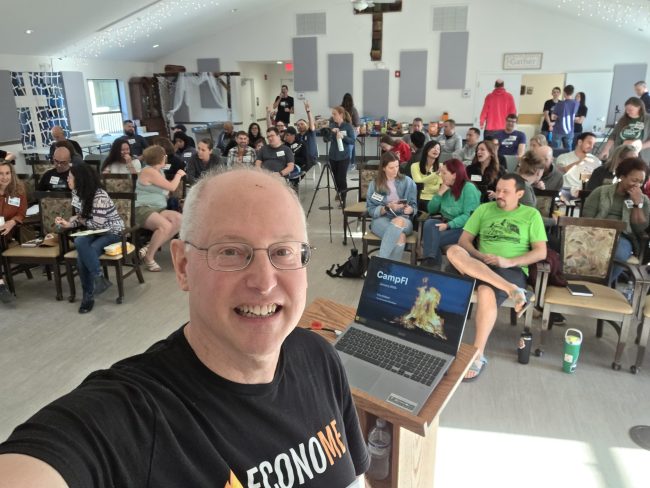
Conversations go deep.
Someone mentioned how hard it is to endure the last 2-3 years of work. It reminded me of an email still sitting in my inbox from a reader struggling with the same thing. We’ll call her “M”, and her email was raw.
It stirred up memories of my last few years of work.
Perhaps it was because of the inspiring conversations at CampFI that I decided to write this article. Perhaps it was that email from a reader. More likely, it was a combination of both.
Regardless, I’ve decided to share…
…what was really going through my mind during the last 3 years of work.
The things we never talk about.
The Reality of The Final Years of Work
The email from “M” resonated with me.
She, like many others, is having a hard time waiting through the last few years of work. I emailed her when I got home from the conference and told her about my idea of writing an article on the topic. She agreed to let me share elements from her e-mail, which I’ll mix in with my feelings at each stage of my countdown.
What goes through your mind during those last few years of work is one of the things we never talk about.
Until today.
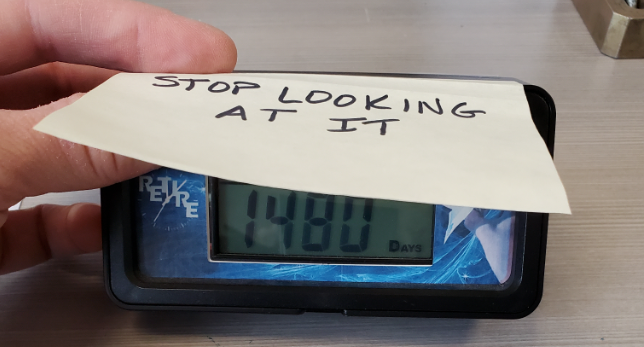
1480 Days To Go (4 Years To Retirement)
I smiled when I received the above photo from M showing the post-it over the clock, and the irony of her lifting that note to take a peek. From her email:
“…retirement clock now says 1,484. I had to put a post-it note over it to stop looking at it.”
And…
“Like you, I love my job, my work, and my work family…but it started consuming my attention and gave me a case of the f-its at work…”
The “f-its” at work, that’s something most of us have felt at one time or another, but it’s one of the things we never talk about. It turns out that I wasn’t the only one who struggled with maintaining focus on my job in the last few years of work, as you’ll see when I share my thoughts throughout this article.
M continues:
“I am holding out until 55 because my company offers early retirees (55 and older) the option to keep their amazing health insurance and only pay 50% of the cost. I also have a pension which should be able to cover that cost for both my husband and I, if I hang on until 55.”

Ah…The Golden Handcuffs.
I wore those same handcuffs (in my case, pension growth and annual bonuses). Those handcuffs are attractive, but they’re painful. I did a case study at the CampFI conference with a woman who was also struggling with the Golden Handcuffs. They’re effective, but they raise a bigger question:
When is Enough…Enough?
I was 3 years away from retirement when I wrote the article “When Is Enough…Enough?” In it, I shared research on how many folks get caught on the treadmill and work longer than necessary. In M’s case, we traded some e-mails as I wrote this post, and I agree with her reasoning for waiting until age 55. Ultimately, it’s up to each of us to decide what our “Enough” looks like, but it’s something we all must do.
Our future slog depends on it.
Before you undertake the most challenging part of the trek, ensure it’s necessary. Determine your “Enough,” and don’t continue to run on the treadmill if it’s not necessary. In my case, I made a conscious decision to work One More Year (I wrote that article one year before I retired), and I drew a line in the sand at that point. I gave up some significant $’s when I broke those handcuffs, but I knew I had enough.
The First Step: Know Your Enough.

Waiting Is The Hardest Part
Once you know your “Enough,” the waiting game begins.
I vividly remember when my coworker “J” retired. It was 1,000 days from my retirement, and marked the psychological beginning of my waiting game. I was happy for J, but also envious. I knew I had 3 years to go, but I dreaded the thought of the long wait to get there.
The next three years were a long slog through the mud.
It’s at this stage that you realize you’ve got a long, difficult wait ahead of you. You keep reminding yourself to be patient. You can see the beautiful mountain range in the distance, but you also see that long valley of thick mud between you and The Promised Land. It’s time to strap on your boots, keep your head down, and march.
I wrote When At Work, Work when I was 3 years away from retirement. In it, I was essentially encouraging myself to avoid the “drift” so common in the last few years of work. In hindsight, the presentation I discussed in that article led to my invitation to be on a Board of Directors in retirement. It’s funny how things work.
It’s hard to walk through the mud, but march on. You’re getting closer with every step. I know, I’ve been there (and survived!).
From M:
“Your metaphor for the long slog to the Promised Land has helped me visualize my journey over the next 4 years…”
The time will come…but it feels so, so far away.
Step 2: Pull On The Muck Boots And Prepare To Slog Through The Mud
Playing The Game At Work
2 years to go, and the slog continues.
You try to maintain your focus and do your job, and for the most part, you do. At this point, you’re an expert, you’ve learned how to play the game, and your efficiency requires less than full effort to get the work done. You don’t share with anyone how you’re really feeling; you simply strap on the mask and do the work. In M’s words:
“It feels like those last two days of work before an exciting vacation where your head is somewhere else…”
You care less about the politics. You pretend to care about your Annual Performance Review, but you know there are no more promotions, and you’re content with getting a “Meets Expectations” for the next two years and happily moving on.
Yes, you’ll feel a bit like an imposter, pretending to be a loyal employee when the reality is something different. That’s ok, keep it to yourself (for now) and remember it’s one of the Things We Never Talk About. You’re getting your work done. Just keep slogging. The following line from M is representative of what it feels like:
“I have never struggled with this lack of focus at work before…it feels like I have a toe out the door there. Maybe that is just my new reality.”
I remember when an older co-worker of mine became “dramatic” in a meeting. When I asked him about it afterward, he smiled and said, “Fritz, it’s all just a game. Sometimes you’ve just got to have a little fun.” Then, he winked. When I reached my “two-years-to-go” milestone, I knew exactly what he meant. Play the game well, keep your mouth shut, and don’t take things too seriously.
At this stage in the game:
“You think less about your job and spend more time dreaming about the future.”
That’s a good thing. Start shifting your mental focus to your post-retirement years; it will serve you well in the years to come.
Finally, as you endure the final 2 years of work, I’d encourage you to read the article from Jordan Grummet titled Enjoy The Climb, which suggests redirecting your goals to find a way to enjoy the journey, not just the destination. It’s good food for thought as you slog through the mud. M’s comments suggest she’s going through this process now:
“I will be grateful for this gift of time and wealth building. 4 years to appreciate who I have become professionally, 4 years to appreciate my incredible coworkers, 4 years to accumulate my toys for retirement, 4 years to work out the de-accumulation strategy, 4 years to dream, plan, and hopefully see that retirement clock hit 0.”
She’s figuring out how to enjoy the climb, and I think Dr. Grummet would be proud of her. I know I am.
Step 3: Keep yourself afloat at work, take time to enjoy the journey.

Fear Creeps In
I’ve never met anyone who didn’t get anxious about their pending retirement, and it typically escalates ~18 months before retirement.
It’s a normal reaction, and it’s appropriate given the scale of the change you’re facing. Based on this survey, more than 60% of employees fear retirement more than death or divorce. Personally, I think that anxiety is a good thing. It forces you to think through your decision, while there’s still time to make a change.
You’ve run your numbers, and you’re as confident as you can be. But…there are always unknowns:
- What if the market tanks?
- What if inflation spikes?
- What if my spending estimates are wrong?
Now is the time to do a deep dive on your numbers. Even if you’re DIY (✋), do what I did: hire a third-party CFP expert who specializes in retirement planning and pay for a retirement readiness review. If you want to find a $150/hr CFP pay-as-you-go advisor, check out Nectarine. I have no affiliate relationship with them; I simply met a few of their folks at a conference and am impressed with what they’re building.
As you’re working through your numbers, there’s no problem with “playing it safe” and working One More Year (like I did). Just don’t let one more year become two or three more years. Draw your line in the sand, and make it happen.
It’s also time to start recognizing there’s an important part of retirement planning you haven’t yet completed. Soon, you’ll be shifting more of your focus to the non-financial elements of retirement. M is currently deep in the numbers, but I was pleased to see her recognition of the need to also focus on the non-financial aspects of retirement planning:
“…my focus shifted from treading water to figuring out how to minimize taxes during retirement, Roth conversions, funding long-term care, how to enjoy retirement successfully, RV shopping, etc.”
A few other thoughts:
Direct 100% of your annual bonus into a money market fund to start building your retirement liquidity. As others talk of the vacations they’re going to enjoy with the bonus, you keep your thoughts to yourself. After all, it’s one of The Things We Never Talk About.
Begin modifying your asset allocation to reflect your new risks in retirement, such as:
- Sequence of Return risk,
- Spending without a paycheck,
- Inflation,
- Longevity risk.
Develop your Drawdown Strategy, and finalize your strategy for Building Your Retirement Paycheck. (I wrote the paycheck article 605 days before I retired)
You’ll hope and pray for a Downsizing Initiative, ideally with the same incentives they offered when we all went through that 8 years ago. You know what “The Package” was, and you know you could leave now if they offered it again today. You’ve been through four downsizings during your career (surviving every one), and you know your wait would be over if they’d just offer one NOW. But it never comes, and you continue to plod through the mud.
Step 4: Be Confident and Patient. Everything will work out just fine.
Time For The Non-Financial Planning
At this stage in the game, your numbers are set. Running that retirement calculator for the 17th time doesn’t bring added value. There will always be some uncertainty in the future, but running yet another scenario will never make that uncertainty go away.
Rather, to improve the odds of a successful retirement transition, start putting as much energy into your planning for non-financial elements as you’ve done thus far on the number side. Taking this approach has been proven to be the most successful strategy for avoiding the dreaded Phase 2 in retirement. I was in the fortunate 15% who didn’t experience Phase 2, and I’m convinced it’s due to my focus on the non-financial elements in my final year of work.
I started this blog 3 years before I retired as an experiment, which is the type of “trial & error work” that helps folks avoid Phase 2. It also helped me think through a lot of things in my last 3 years of work. Check out The Retirement Manifesto Archives and scroll back to 2015-2018 to see what I was thinking at the time. In hindsight, I’ve learned that experimenting before retirement pays big dividends during your upcoming transition and is well worth the investment of your time in your final year of work.
It worked well for me, and it will work well for you.
The paycheck isn’t the only thing that goes away when you retire. It’s time to think through the non-financial benefits you receive at work (Sense of Identity, Sense of Purpose, Structure, Relationships, etc.). Plan through how you’re going to replace each one. Use your weekends to explore things that could become retirement hobbies, starting now. In the process, you may find something that replaces the “Sense of Purpose” you currently get at work. Volunteer at the dog shelter, take a vacation to a place you’re considering relocating to, reconnect with old co-workers who have retired, and ask their advice. Take all of your vacation time, and take a 10 Day Retirement, with a focus on the mental preparation for the road ahead. You may want to consider joining a gym near your home; those morning classes are a great way to replace some of the lost Structure in your retirement life (speaking from experience).
It’s never too early to start focusing on the non-financial aspects of retirement. Skipping Phase 2 depends on it.
Consider yourself warned.
Side Note: One thing I found interesting about the final year was the reality that every “annual” thing you’ve done for decades, you’re now doing for the last time. The annual budgeted process, the annual review, etc. As you get closer to the end, enjoy experiencing your final “Quarterly Business Review,” or your final “Monthly Report.” I found it an enjoyable game to play as I watched the countdown clock tick off that final year.
Step 5: Stop worrying about the numbers and focus on the non-financial elements of the transition.
Time To Tell The Boss You’re Retiring
After suffering in silence for years, you eventually have to make your plans known to your boss. Everyone has to decide when the right time is, and it’s a challenging decision. How long is too long? Too short? How will they take it? How will your relationship change after she knows you’re leaving? Then again, does it really matter? You know your plan, and nothing is changing it now. You’ve already decided you’re going to reject any incentive they might offer to keep you around (a bit prideful, perhaps, but the reality is they may try to get you to stay). But you know your “Enough,” and nothing is moving that date.
In my case, I told my boss with 6 months to go. We had a great relationship, and I wanted to give him the courtesy of enough time to find my replacement, conduct training, etc. It worked well for me, but I totally understand those who choose a shorter window. The longer the window, the greater the risk.
In your final few months of work, make sure you check out the 20 Steps To Take In The Year Before Retirement. That’s been a popular post, and it includes a lot of things you might miss, like:
- Creating a checklist to make sure you don’t miss anything,
- Getting a copy of your electronic address book from work,
- Buying your retirement toys before you retire, and…
- 17 other helpful tips I wrote as I was going through the process.
It’s surprising how much you have to get done in your final few months of work. The clock officially starts ticking on the day you tell your boss. The waiting is almost over.
After enduring a difficult slog for a few years, it was surprising to find the final 6 months were some of the most enjoyable of my entire career.
Step 6: Implement the details to ensure a smooth retirement transition.
Take Time To Say Goodbye
The final 10 days will fly by in a flash. Be intentional, and keep a list of folks you want to say goodbye to. Your replacement should be in place by now, so don’t try to get any work done. Stop by the office of the few true friends you have in the office. They’ll promise to keep in touch, but they won’t. Recognize that this is your golden opportunity to thank the folks who have made your career possible, or who have become your work friends. Respond to all of the emails you receive, and share a personal story or favorite memory of the person who sent it.
Recognize that these 10 days are the last time in your life that you’ll be recognized as the professional you’ve become. In a few short weeks, it won’t matter what you did for a living. Your sense of identity will soon be shaken, so enjoy the last few days when you are, for the last time, the identity you’ve been for a very long time.
One of the things I most appreciated about my boss was a private dinner party he threw in my honor on my last night of work. I was at the biggest global conference in my industry, and he asked me to invite my 8 closest friends to the dinner. As we sat in a private room of a Chicago restaurant, I savored every minute with the friends who meant the most to me. It was a great evening of storytelling, laughter, and friendship.
It was special.

Of all my memories of my final few years of work, that dinner resonates more than any other. It was a special time, and it occurred on my very last evening of work. The following day, I flew home, drove to our cabin in the mountains, and officially crossed “The Starting Line.” Thanks for that dinner, Nick. That meant a lot to me, and I’ll be forever grateful.
I couldn’t have asked for a better way to end my career.
Step 7: End Well.
A Final Word of Encouragement
As one who has made the same march, I offer this encouragement to M and anyone else who is currently slogging through the mud. While it feels unbearable at times during the hike, the view is different when you reach The Promised Land. In hindsight, the memory of the slog is but a mist. Like an air freshener that fades moments after you pull the trigger, the slog recedes to the far reaches of your mind once you make it to the mountain.
Life is good once you reach The Promised Land. The destination is worth the wait.
March on.
Your day is coming.
Conclusion
I realize we all have different journeys as we work toward “The Starting Line” of retirement. For those let go unexpectedly, much of this article won’t apply. Others may enjoy their work right up to their retirement date. Like M, however, I know many of you are trudging along through the final years in agonizing silence.
What goes through your mind in your final few years of work is one of the things we never talk about.
But…we should.
It’s a reality of the retirement transition, and it’s something you’ll likely go through (if you haven’t already). If you’re married, you’re talking to your spouse about it, but most folks hold their thoughts close to the vest at work. In the workplace, you’re likely feeling more isolated and alone. Imposter syndrome tends to have that effect. It’s unpleasant, and it’s something none of us talk about. It’s too risky, I suppose, as represented by the fact that I waited until my 8th year of retirement to write this article.
Hopefully, by sharing what was going through my (and M’s) mind in the final few years, it will open up the dialogue on the realities of the “Waiting Phase” of retirement. It’s the beginning of the retirement transition, and it’s something to embrace. After all, we’re fortunate to be in this situation, unlike countless earlier generations who never had the opportunity to enjoy decades in retirement. The slog is a small price to pay for the days ahead.
It feels long when you’re in the middle of it, but trust me when I say The Promised Land will be here before you know it. In the meantime:
- Reflect.
- Endure.
- Persevere.
- Enjoy the process.
And…to add one that M sent me in one of her emails:
- Thrive.
Retirement is getting closer with every passing day.
Your Turn: If you’re in your final years of work (or, if you’ve already retired), which of the sentiments above most resonates with you? What did I miss? Why don’t we talk about it? Let’s chat…
Just ride through it and enjoy!!!!! I was promoted to a training position my last year. It was so neat I really enjoyed it and I almost stayed another year!!!!! Ha Ha…….. 55 and done with 38 years!!!!
David, I had a friend who made the same transition to training in his final year, and he also enjoyed the role. Glad it worked out well for you, and that you decided not to do the OMY when you had “enough.” Thanks for the comment, and congrats on 38 years.
Thank you!!!
Our company was doing one of a perpetual round of layoffs in May of 2024 and I was 62 and offered a package by my manager. I wanted to take it, but could not answer my wife’s questions on readiness. I read your book at that point, and really turned my attention to getting ready. I met with 5 different Financial Planners who all told me we were in great shape financially. So i made retirement planning my focus, I told my boss I was ready and would take the next package. I knew there would be one available due to my grade and demographics. He backed off assigning me new work, and I got ready. I retired in August, so I had just 3 months to convince my wife it would be ok. I was a Project Manager doing large scale data center migration projects, so I turned those skills towards my own retirement migration project. I am in my second year, and retirement has been better than expected. The one thing that was odd was my management team was coordinating my package-but telling HR I was being let go, because HR wouldn’t allow voluntary funded retirements. So I was only allowed to tell my coworkers in the last 2-3 days. When it came time, many of the HR folks were cut and were not even participants in my departure. I never got the “letting you go” speech that I had been coached to receive. Just a great thanks for all you have done call with my boss. The sense of gloom around the perpetual cuts made it very easy to leave the environment though.
Deceiving HR? I like the way your boss played the game for your benefit. 😉
Make a list of all the things you’d rather be doing, and that becomes your to do list for your first year of retirement. It also helps to keep puzzles nearby during boring conference calls.
Puzzles during conf calls? Oh, the joy of working from home! Afraid I missed that opportunity. Good suggestion on the list of things, reminds me of the jar my wife and I filled with activities during my last year of work (I was going to include that, but the article was too long already….)
I would read Fritz articles during my boring conference calls while working at home.
So many years later this is what resonates with me “Play the game well, keep your mouth shut, and don’t take things too seriously.” I absolutely disliked and distrusted a new boss my final two years and he could tell that I, along with others, felt he was incompetent. It was good practice for me to keep my mouth shut when I was moved into a new position with a pay cut. Never mind as I knew I was only 10 months away from leaving. I found a consulting gig that I kept for three years after retirement but wound that down from the initial 55 days to 40 days to a final 20 before letting go. Those three years of consulting kept me in the game but never enough to take anything seriously and allowed for a few new toys Good luck to M, I had far more in all buckets that I knew and she will as well.
Nothing worse than an incompetent boss. The Peter Principle is alive and well, unfortunately. Glad you survived the slog through your final two years.
As I approach my 72nd birthday in a month, and consider Fritz’s ‘words we don’t talk about’ I once again cannot relate. In my late sixties I was part of a Retirement Mastermind group for a couple years with a small group of retirees. One of the strict rules was absolute confidentiality. All of the others mentioned ‘those words’ and I got to witness first hand how painful the last years prior to retirement must have been (albeit comfortable since things like pensions, Roth IRAs, health insurance were part of the deal). Each member of our group offered a 90 minute presentation on a topic of their choice. My struggle was trying to figure out what retirement is supposed to look like, so I titled it ‘Sliding into Retirement.’ I had a job for four years in my late 20s right out of grad school, and liked it a lot, but on my 30th birthday I told my boss that I was resigning. I spent the next 36 years engaged in risk taking, not because I had huge assets (I’m the grandson of a rancher who died of a tick bite leaving a widow and five teenagers to fend for themselves after the USDA foreclosed on the ranch), but because I lived very simply and worked very hard. Most thought I was crazy (including my dad) for buying rundown apartment buildings with OPM (other people’s money) including adjustable rate mortgages that I got into with very little down payment. It was kind of like baseball where I struck out a bit, but also hit some home runs. The process was mainly fueled by inspecting 20,000 homes for real estate clients, one at a time (about 500 per year). At 38, I scraped together $500 that I put down on a river lot in Blue Ridge, Georgia, and signed a note with the seller. My dad again weighed in that buying raw land was like buying a milk cow that did not produce any milk. That blossomed into a larger 17 acre, 25,000 SF asset that I still own and work at every day. So fast forward to my late sixties when I began to read Fritz’s blog, and was having a hard time figuring out what retirement meant for me. The two years I spent in the Mastermind group was one of the best ‘therapeutic’ activities ever, and helped me figure out how to truly enjoy retirement. Number one is that I love to build (anything, as long as it is creative) and I dislike management. So I continue to build, but have delegated management to other family members. I also love three things: volunteering, playing music, and fitness. In hindsight, it’s not been an easy path, but I am grateful that I’ve never had to ‘say those words.’
Greg, great to see you in the comments, old friend! I’d say buying that non-milking cow worked out pretty well for you, your Dad would be proud. Yours has been an interesting, and successful, path. I enjoy our friendship.
I retired last July 1. I decided in spring 2024 that the next year would be my last. (I was a professor and on an academic year calendar, so July 1 was the logical end date.) I put a one-year countdown app on my phone on July 1, 2024.
My last year was a good one. Because I’d made the decision, I was very conscious of what I wanted to accomplish at work before the year was up and took time to appreciate the “lasts.” Like you, my boss threw a dinner party (at his home) with my six closest colleagues and our spouses.
In hindsight, I actually started the process in 2022. At my job, I had merit reviews every three years, and my pension was based on my three highest years of salary. In 2022, I had a very good review and was fortunate to receive the highest possible raise. I decided then that unless a health crisis intervened, I’d go three more years to lock that increase into my pension. The question was whether I’d continue past that point (2025), and some icky university politics that emerged in 2024 made it clear that I wanted out in 2025. Between 2022-25, I systematically started making myself more dispensable. I stepped down from a management role. I stopped admitting new PhD advisees. I retired from an editorial board of a journal. I was very aware that it was time to start handing things off.
I’m now almost seven months into retirement and ecstatically happy about it (Phase One). I doubt there will be a Phase Two, but we’ll see. Reading this post and clicking some of the links for earlier pieces reminds me of how much I’ve learned from your work over the years, so thanks for that!
Dana, congrats on a well-executed exit. My Dad was a college professor, and we spoke frequently about the differences of being in the later stages of your career in an academic vs. business setting. Typically, the academic world respects “elders” more than the business word does, though the pesky politics seem to be applicable to both environments. Congrats on the first 7 months of retirement, here’s hoping you jump straight to Phase 3!
Fritz – what an outstanding post! Just last week I said goodbye to one of my closest colleagues at work and it’s definitely a different place without him. Clock say 1,745 days but I know those days go faster than we expect them to. Thanks for this gem – it’s a game changer. Bests from Minnesota.
“Outstanding post” and “game changer,” I could ask for no greater compliment. With 1,745 days remaining, I’d say the timing was perfect for you. Enjoy the slog, I empathize with the mud being a bit thicker with the “loss” of your close colleague. I’ve been through similar exits of friends, and it does make the work environment feel emptier. Your time will come, keep slogging!
This all sounds very familiar to what I have experienced. I still will hit “Phase 2”, but have at least taken some actions to engage in a new life.
I gave about 14 months notice so that I could float the idea of a gradual transition over the last 6 months. It was great (4 days/week July through Sept.; 3 days per wk
October through December. I highly recommend it if you are confident they want to retain you.
Unfortunately, I retired Dec. 19 and had a mild stroke on the 22nd, spoiling a holiday trip to celebrate with my side of the family. Thankfully, I’ve regained 90% via PT and hitting the gym. I had lost weight 2 yrs prior and we eat a very healthy diet. Pay close attention to trends in your vitals and bloodwork markers. My PCP and I were a bit too passive. I thought I had it all figured out….God has other plans, but am thankful for a second chance to rethink my priorities.
Thank you, Fritz for sharing this story, another well timed for my situation.
Keep up the good work!
Dave, so sorry to hear about your stroke on Day 3 of retirement. Man, that’s tough! I’m pleased to hear you’ve regained 90%, hoping you’re able to put it behind you and enjoy the years ahead. A good reminder on how precious our time really is, thanks for the valuable addition to the discussion.
This really reinforces your point about the non-financial side being the hardest. I found that planning for retirement—draft calendars, lists of activities, imagined routines—was relatively easy once started. What actually mattered was going out and doing them. Purpose didn’t come from the plan; it came from motion. The best advice I received was to try ten things and see what sticks. Some fade, a few become regular, and that’s not failure—it’s the process. In hindsight, the planning was just a launchpad, not a definition of retirement.
“The best advice I received was to try ten things and see what sticks…”
Great advice, thanks for sharing it with all of the readers of this blog. The transition is, indeed, a process. Glad to see you’re managing it well.
Disappointed by all the up front click bait after reading the article. At my old job everyone 5 yrs out +/- are talking about retirement all the time. Why because everyone knows it’s coming. It’s not a surprise ! The only people that hang around are those at the very top that can’t walk away from $10M/yr and a company jet…and those that are divorced and having to split their pension with the ex.
Apologies if the intro read as click bate to you, Allen. I can assure you that in my world no one talked about what they were really thinking as they approached retirement, and I was being sincere when I stated that I’ve never seen anything written about it in my 11 years of studying the topic. I’m pleased to hear you had a more open and transparent work environment. You were a fortunate man.
“Pretend to care about Annual Performance Reviews” during the last years was one of my favorites. Managers had to justify high rated, or low rated, reviews and do were loath to have anyone above or below Meets Expectations. I made up some outlandish stuff, but never mean, or vendictive. My supervisor always did the review, he didn’t care, and I never got push back from the manager, I assume he never read an average review. Then a buyout came along a few months before I was going to leave – I hope all of you are as fortunate as I have been.
A buyout!? Lucky dog. I used to be envious of folks like you, but that faded quickly once I completed my slog through the mud. Now, I can honestly say I’m happy to hear when folks get a buy-out offer in their final year or two of work. Congratulations on getting some good cards dealt your way!
A fun read, honestly, Fritz! Looking back from 16 months into retirement at those last couple or three years, I can definitely relate. For me, the “Downsizing Initiative” opportunity came along about 20 months prior to my planned date, so the shortened timeline reduced some of the drama of “waiting.” Like you, we had an event with all my peer managers, plus some superiors and some of my chosen invited guests, and what a celebration it was. Though I wasn’t quite sure the timing synced with my “Enough,” it has turned out better than I’d ever expected.
Another buyout? Ok, now I’m starting to get envious. 😉
My last few years were anything but a slog! I was promoted despite everyone already knowing I had 2 years before I retired. It was a job I loved, but it also meant I was on a mission to get everyone ready for my departure. Because I had lost my filter, I was bossy with management and got my way with most everything! Six months before I was due to be done, a severance package was offered to most everyone. I grabbed it and retired 4 months earlier than originally planned, but by then, all my ducks were in a row, and I spent a LOT of time just “moving the mouse”.
Planning is critical, but having fun with the job for the last few years can lead to some of your most rewarding work-life years, too!
A promotion AND a buyout? Ok, not I’m really getting envious. Smiles.
I guess I was one of those lucky ones that enjoyed working and did not have that “dread” of enduring the last 2-3 years of work. On a previous session with our Fidelity advisor, we were told that we had achieved financial independence (FI). I didn’t really know what that meant at that time. I later found out that our 401k would survive the 4% rule if we spent 80% of our current salary. At the time, I didn’t feel that we had achieved FI and my work situation was reasonably good. My wife’s situation was different, though. Three years after that Fidelity session, she asked if she could retire earlier than we had planned. Because of the level of stress she was facing, I agreed. We both worked for the same company but in different areas. That was my wake-up call to prepare for retirement.
At first, I decided to retire at the same time. It would make traveling much easier. However, my company asked me what would it take for me to stay. Somewhat tongue-in-cheek, I told them my terms (since they asked). I did not think they would take it seriously but apparently, they did. While I liked my job in general, the personnel management role was probably the most stressful. The two other roles I had were principal investigator (PI) for research & development and (for lack of a better term) a troubleshooter (where I would lead a hand-picked team to solve a problem at a remote location). This latter role would happen two or three times per year. Both of these roles were enjoyable. The PI role led to multiple patents and an invitation to lead a DARPA (Defense Advanced Research Projects Agency) project. The troubleshooter role was very “high stress.” Success significantly raised the company’s reputation and failure was not an option (and thankfully, we never failed). It was probably these last two roles that allowed me to somewhat “dictate” my terms for staying on. I presented a three-year plan to cut back on my work, while transitioning such roles over that time. I was given one year to find my management replacement, which I did. Once that was done, I was relieved of that role (no longer a personnel manager) and could concentrate on the two other roles, which I enjoyed. During the last year, I was allowed to go part-time (needing to deliver 64 hours over the two-week pay period). Additionally, I also received permission to work two days per week from home. This was a nice arrangement. However, our desire to travel longer term (greater than three weeks at a time), finally drove me to stick to our original three-year retirement extension.
During my retirement ceremony, our ex-CEO (who hired me 31 years earlier) offered me an opportunity to consult with another company where he sat on the Board of Directors. He said I would be an ideal candidate to work on a six-month project working directly for the CEO of that company. Since I was very familiar with the company (and the CEO), I agreed to meet. The initial agreement was to help for the six-month planned duration working one day per week (from home) as a consultant. The actual agreement was to be available 40 hrs per month to work on assigned tasks. However, that arrangement lasted five years. When I tried to terminate the agreement at the end of three years, I was talked into scaling back to being available eight hours per month for two more years before finally quitting. What was also nice about this arrangement was that I didn’t have to worry about billable hours since they paid me a monthly retainer for being available. All total, I had almost eight years (three before and five after) of retirement transition. None of this was planned. One thing I learned though is that it never hurts to ask.
“One thing I learned though is that it never hurts to ask.”
Great story, and a good reminder of how much leverage we really have when we no longer need the job. I had a friend who has a similar story. He was shocked when they agreed to his terms, and as a result he’s got a nice buffer for the rest of his life. Sometimes, “more than enough” can justify staying. It’s a personal decision each of us must make. Happy it worked out well for you.
I am in my final two years of working for my employer (end of 2027). It gets real when I am in meetings or discussions about long-term implementations and such. I just smile inside 🙂
My boss knows my plans already because it will take some time to fill my role – not because I’m so important, but because no one wants my job (overseeing the necessary evil of all businesses: insurance & casualty risk).
Meanwhile, I’ve made a concerted effort NOT to end up like a work associate who was a total burnout case his last two years before his planned retirement (which couldn’t come fast enough for his colleagues).
As Fritz writes, I’m enjoying the ride and carefully planning as I look forward to what lies ahead.
“It gets real when I am in meetings or discussions about long-term implementations and such. I just smile inside.”
I remember that feeling. Kind of fun, actually. Enjoy the ride, those two years will pass more quickly than you realize.
Thanks, as usual , for the article. I am just about on your timeline, and remember how grateful I was to follow along your early blog, as I was also planning for retirement. I started planning about two years out. Company offered early retirement at 55, my daughter graduated high school about 6 months after my 55 bday, so I made my last day the day before her graduation. Planning for the retirement paycheck, & planning mentally for the change in structure were the two keys for me. Was in a management role for the last 30 years, and was used to a lot of people reporting to me. All of the sudden , it was just me and the dog, out walking every morning. Luckily, with help from your own blogs, I had planned for that mentally, but I have seen others who don’t, and get to phase II, only to struggle. I credit your blog for helping me to plan for that time and I eased right through that time. One back surgery, and many walks later, I am just enjoying this time. Don’t regret a thing, and still look forward to your occasional posts. Thanks again Fritz!
“All of the sudden , it was just me and the dog, out walking every morning.”
I can relate to that one, JC. Thanks for the kind words about my blog, it pleases me more than you know to hear from folks who say my words have made a difference in their retirement. Thanks for that, it’s why I do what I do (tho, admittedly, less often these days).
Great post Fritz. One of your best. Impressive.
I was stationed along the DMZ of Korea in 1984. GIs stationed there had a one year hardship tour and had a “short timers” calendars where they crossed off days, most connecting dots that would reveal a lovely lady on day 365. Our brigade commander bought billboard ads along the western corridor of the DMZ, posting “Don’t count the days, make the days count” and “You are not short until the no smoking light is turned off on the plane home.” I was a field artillery battery executive officer on a fire base with harden bunkers. My battery was always on alert, but my troops had their short timer calendars, never getting complacent. I would tell my wife and friends nearing retirement “Don’t count the days, make the days count” which did not resonate. Working is a long slog. I don’t blame people in Step Two who are counting, but most do make the days count.
‘Don’t count the days, make the days count’ is a great mantra. Who knows if you’ll see that retirement clock or deployment clock hit zero.
I definitely had this. And went through it three times as my employer took an entire year to execute my early retirement because my boss kept delaying my end date. Without boss’ ok, I wouldn’t have gotten the severance, so I was forced to wait it out through repeated delays, one of which occurred the same day as my supposed “last day” and when an after-work party for me was planned. We did the party anyway and I got a lot of teasing about it.
Then I allowed them to rehire me on short term contract. TWICE. The second time was supposed to be only a few months and it turned into nearly 4 years. The last iteration was definitely the worst, because by then I was mentally spent, grieving the loss of my mother, and wanted to get out.
I used this time and severance/vacation payout to pad my cash savings and add to 401K/IRA accounts.
I thought I might work another year or two – even though I had high confidence I had enough resources to get started. Then I got laid off at 59 – a nice push. Even got a big raise during COVID since I was unemployed. I’ve done some part time for 5 years now — maybe 150 hours a year. Just keeps me engaged and out of the house – but I see that ending soon. It is hard work to change to a spending mode! And sequence of return risk – which was my biggest fear – never raised its ugly head.
Interesting article, but I think you missed one important point. Many of us don’t work at places that are less stable than what you describe. Thousands of people in Tech, US Government, and other fields have been forced to adjust their retirement plans due to downsizing. In my case, at age 67 I had planned to work until 70, but I could see that my small tech company was going downhill with periodic layoffs. I figured they might lay me off before I got to 70, but at 67 I was not eager to start a new job search so I decided to stay. After I turned 68, I realized another layoff was imminent, I didn’t want to be surprised so I arranged for a retirement schedule with my boss. Many other people are not as lucky as me, they might plan to retire at a certain age, but their company forces them out sooner.
Great thoughts, especially about non-financial items. Engineers were asked to return to the plant in January 2024, but not me. An inquiry discovered layoffs in progress. I was ready, thrilled, and pretended stoicism (somebody has the job of reducing payout for those willing to leave). Severance was better than cake. I personally said 40 goodbyes (several were tearful). I ended with a 3-year experiment mentoring new engineers and giving them the credit on tasks performed to their managers. Wow! Work became a very happy place! While handing them the reigns, I was looking forward.
So happy in retirement! Success came from 25+ books on the subject, long term planning (saving since I was 24), a desktop picture of retirement activities, and above all sensing God’s love and provision.
Interesting reading this. Oddly I ended up retiring early kinda by accident. I came to FIRE movement late, I’d say 2017/2018 timeframe, late 40s. My wife and I had been strong savers our whole career. She was coming up on an age 55 retirement with a great pension, healthcare and 403b balance. When she was a year out, I started doing some more detailed math and came to the conclusion we were already financially independent and had been for about 3 years. I couldn’t quite believe the numbers and spent the next 6 months drilling down and poking at it and kept coming to the same conclusion, with my wife’s pension we had about 3 times the amount of money we needed to retire. Our withdrawal rate was sub 1%. Both my wife and I just assumed I’d work a few more years because I was almost 3 years younger than her. Then one day I sat her down and showed her our numbers and the math. She was skeptical like I was at first, but the numbers didn’t lie. I suggested that I should retire with her. This was in May of 2021. I ended up working until Jan 2022 to secure some unvested stock and a sales bonus. Work was a mess during the pandemic which also factored into the decision. Even though I had worked at my company for 25 years, there was so much turnover, reorganization, that I felt completely disconnected from nearly everyone in the company. I had just a few senior mentors but I couldn’t discuss with them because it might have made some of my financial compensation at risk. There was lots of movement between competitors at the time. I had to wait until 30 days before I was retiring to notify my manager, who was not only a new manager, but new to our team a month earlier. Once I notified my manager, shortly after I had a 45 minute conversation with my skip level manager, whom I had a good relationship with. At first I could tell he was feeling me out to see if I was going to a competitor. Once he was comfortable with my retirement and I was legitimately retiring, we spent the rest of the call talking about FIRE, how it works, the math etc. he was quite kind and said if for any reason I wanted to come back he’d be an advocate to help me. That was quite thoughtful and just reinforced why I liked him as a leader so much. Now 4 years in we’re in a nice rhythm, I’d say the big challenge is my friend group has kind of shrunk a bit. It took a while but I made some new friends in my main hobby, photography, most of them about 10 years older than me and retired. But I’m thankful I found them.
I just retired this month (age 65). I definitely relate to all of the above (my wife read this and saw what I was going through through the lens of this article). The last year was the hardest, but I had my line in the sand drawn and my wife acted as an enforcer to make sure I didn’t waiver. I’m now in that retirement honeymoon stage, but I’ve already got things lined up to fill in the non-financial aspects (I consider the financial aspects the easier part of retirement planning – I was an engineer and both my wife and I have Math degrees).
When Covid ended (basically 2022) I told my boss I’d retire on 12/31/25, unless management ticked me off, and then gave him about 5 examples that would cause me to retire instantly. Not a threat, I was serious and he knew it. About every 6 months I reminded him of my retirement date, that it was set in stone, and they needed to have a replacement ready. I retired and my replacement took over without a hitch. In my case, my boss appreciated me being forthright with him. Being in a strong position gave me peace of mind.
Good article Fritz. I retired last year at the end of April. I enjoyed my work in healthcare but it was time to move on, I needed to find the off-ramp. I spent a lot of time preparing for the transition. I spoke with friends/strangers who had retired always asking what they did or didn’t do, read books, crunched our numbers, l I felt pretty good going into the next phase. Funny thing, for the first month after retiring I was a wreck, I couldn’t shut my mind off, I had become so used to doing so many things in a day with meetings, patient care, documentation, etc….it took me a few months to decompress fully. I’m now at a point where I don’t try to overload my day but has taken some time. I love owning all my time but have no clue how anyone can retire without proper planning. Appreciate your book, blog and other resources, it’s helped me greatly.
I think anyone that has had the good fortune of being able to plan their retirement date ahead can relate to most of these thoughts. In some ways, I feel like I was more effective my last year because I was not worried about offending others or making a poor decision. I was also very intentional about staying engaged until those last few weeks because I had seen too many “working retired” and I did not want to be one. Thanks for another great post and “breaking the silence” Fritz!
There was no “slog through the mud” phrase, & the phrase 2 depression and anxiety came after my sudden and immediate retirement due to my spouse’s life-threatening medical conditions where she was on a vent & in the ICU. As a medical professional, I really enjoyed my career and all the interactions with my co-workers/professionals; especially the connections that were made with my patients. But I also knew that my spouse needed me and she became my most important patient during the days she was in the unit. My decision was immediate and there was no long planning, no long good-byes. Everybody were very supportive and understanding. My retirement lunch was on the last day at work with coffee and donuts.
The good news is that she is gaining her health back and we are now enjoying our unplanned retirement and enjoying each other more than ever before. I have never openly talk about those feelings but thanks for your article to make them surfaced; and we really thankful for your work. Great job, keep it up.
Thanks, very helpful article as I get closer. I like the comment from someone who ran their numbers by 5 financial advisors as it echos how I’m feeling!
Wow! I am amazed at all the comments on this great article.
I am currently slogging thru Corporate American with 50 working days left. Yes, I counted. I have a counter on my computer but it includes weekends and the vacation days I will be “granted” before I leave, so I do have to manually count every once in a while. And with this company, if I don’t take the days I’m granted, I will lose them and not get paid for them. And if I take too many days, I will have to pay it back on my final paycheck. There are no bonuses any longer for my salary grade (they took them away last summer) and no buyouts. They got rid of our pensions over 30 years ago and sent everyone a check that didn’t have enough time. And there certainly will not be any benefits package to keep me going either. I am holding my breath telling my manager when my last day is because I really want that 1% raise I will be getting this year. (My manager already told me that the dollar amount she was given is the worst she has seen in all her years as a manager and that has to be split with all the US employees under her.)
Anyway, I have been at this company for 34-1/2 years and they don’t give a crap about the employees and the morale has hit rock bottom. I think that the company sees us working from home as a golden ticket benefit, but for someone who has worked from home for over 22 years, it really isn’t (other than they pay my internet bill). They are hiring more people from off-shore when someone leaves or changes jobs. They took away any kind of awards or incentives to keep us enjoying work. And, of course, they want us to work more.
Sorry to complain about the company I work for, but my comments say it all. I spoke with my financial person in November and we went over everything and she said my husband and I are in really good shape. I will be getting SS when I retire and hope not to touch too much money before I really need it. Plus I will be getting a part time job after taking some time off to re-group my brain and get me where I want to be. I already joined gym, lost some weight, and have some great crafty friends to hang with at least once a month.
Since there is no longer “Joy in Mudville” I am slogging thru the last 50 days of work and doing my best to keep my head straight.
Perfect timing for me—I’m six months from retirement, and I’ve been having many of these same thoughts. After 35 years in a high-demand job, it feels strange (and a little guilty) to throttle back, especially when I haven’t shared my plans yet and we’re still talking long-term goals.
This year feels like the last stretch of a 5K I once ran. I thought I was at the finish line and, full of adrenaline, launched into a sprint to crush my personal best… only to realize I’d misread the course and still had a tenth of a mile to go. I immediately ran out of juice (and dignity). What followed was less “running” and more “dramatic shuffle.” I wasn’t sprinting, I wasn’t walking—I was bargaining with my legs and hoping no one was watching. I did eventually cross the real finish line, but it wasn’t pretty, and it definitely wasn’t fast.
That’s exactly what this year feels like. I’m no longer sprinting like I did for most of my career. I’m in “power-walk-to-the-exit” mode, trying to finish strong without collapsing. And that brings some guilt and even a bit of hypocrisy, since I used to look down on people who seemed to be coasting while I was sprinting.
It helps to know that the guilt that comes with cruising is normal—or at least that I’m not the only one feeling it. I also need to remember all that I’ve accomplished over my career and the value I’ve brought to my company. It’s also fun to track my “lasts,” like my final United Way pledge period, goal-planning session, and year-end review.
Thanks, Fritz—this really resonated and covered something I haven’t seen in other retirement blogs or podcasts.
I took you example of trying to get ahead of Phase 2 of retirement and have 6 months to go. Your article hit on many of the feelings I have been going through. The golden handcuffs are real as is the OMY syndrome that I am in.
I think we need a new term for the last year or two. How about Quiet Retirement as a take off of Quiet Quitting. I have found near the end of my career that I have become really efficient at what I do. What use to take me 40 hours likely takes 10. Wisdom comes from the years of experience and patterns emerge. When I am doing the same type of work I have done 7 times previously you just lean on your experience and go fast.
Once you accept you are leaving you stop looking for new things and just do what is on your plate with no more striving. Quiet Retiring would be a good description. Especially when you do not have a good boss.
I wrote about Quiet Quitting and this phase of my career a couple of weeks back (vaderonfire.com/2026/01/10/the-imperial-coast-quiet-quitting)
Hello. I greatly appreciate this article and the many I have read over the last year since finding your site. Thank you! Would love your thoughts on this – I’m a small business owner and while much of this content resonates with a prior career (25+ yrs ago) my dilemma is now the non-financial aspects of what to do AND more immediately figuring out how to create a soft landing for 3 long time and loyal employees that have helped create my very fortunate situation. Assume the biz is not sellable nor transferable to existing employees so closing down seems to be the primary solution. In addition to the “what will I do after the biz?” challenge, I don’t want to suddenly abandon my loyal team of 3 but telling them too soon would be very disruptive to the exit plan. I have an office lease that ends in 2.5 yrs and I’ve fictitiously created an exit strawman around that timeframe, I now need to make it less fiction and more real. I’d enjoy thoughts from those of wisdom!
I had a solid last two years+. I had built a team that could operate with some level of autonomy and trust. As I was pulled more into special projects that extended my stay, the team respected my dual role and the company trusted me to assist with finding my replacement. In the end, the HR VP wasn’t kind and made it known that I have overstayed my extension, even though they had asked to me to extend more than twice. Had a great retirement party when I first anounced, but the final exit was 20mos later with no fanfare and a cold exit with a HR associate. No regrets.